
Menu
-
Shop All
Contact
hey@getstride.com
Stride Health Group
Stride Health Group Ltd
Company No 05158025
Lamas Road
Badersfield
Norwich
England
NR10 5FB
UK
Extra 10% Off | Enter code GIFT at checkout


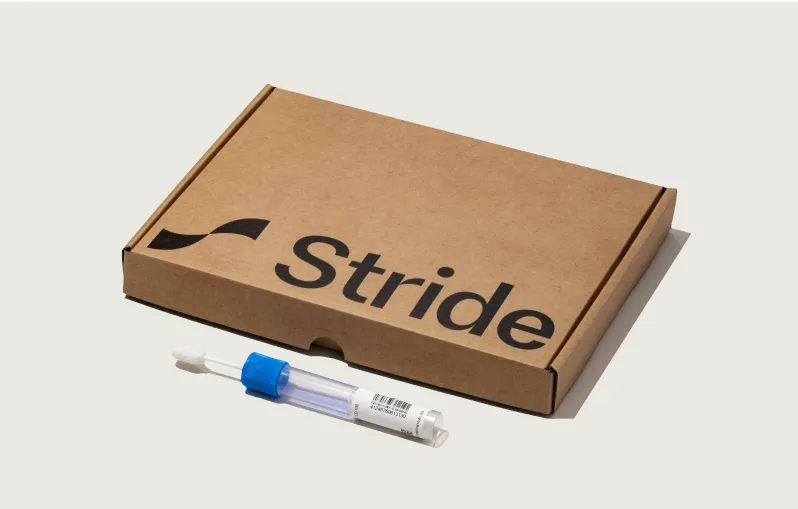






Apolipoprotein B/A1 Ratio Blood Test
The Apolipoprotein B/A1 Ratio ApoB/A1 is a heart health blood marker that compares the amount of plaque driving cholesterol particles ApoB to the amount of protective HDL related protein ApoA1 in your bloodstream. It acts as a single, powerful summary of the balance between atherogenic and anti atherogenic particles and can reveal cardiovascular risk that standard cholesterol ratios can miss.

Sample type
Blood sample

Collection
At-home

Often paired with
Lipid panel, triglycerides, non HDL cholesterol, Lp(a), hs CRP, HbA1c, full ApoB and ApoA1 results

Fasting required
0
Key benefits of testing the ApoB/A1 Ratio
An ApoB/A1 Ratio blood test can help you:
- Quantify the balance between artery entering, plaque forming particles and protective HDL related particles in a single number.
- Refine cardiovascular risk assessment beyond LDL cholesterol, HDL cholesterol, and standard cholesterol ratios alone.
- Identify hidden risk when traditional lipids appear acceptable, especially in people with metabolic syndrome or discordant results.
- Support clinician guided decisions on how intensively to address cholesterol, triglycerides, and broader cardiometabolic risk.
- Track how your lipid related risk changes over time with lifestyle shifts and any lipid lowering therapies.
- Understand how ApoB and ApoA1 are working together for or against your long term heart health.
What is the Apolipoprotein B/A1 Ratio
The ApoB/A1 Ratio compares two key apolipoproteins:
- Apolipoprotein B ApoB, found on atherogenic particles such as LDL, VLDL, IDL, and Lp(a), each carrying one ApoB molecule.
- Apolipoprotein A1 ApoA1, the main structural protein of HDL particles, which support reverse cholesterol transport.
By dividing ApoB by ApoA1, the ratio integrates how many plaque driving particles you have relative to the protective HDL related capacity that helps remove cholesterol from arteries. A higher ApoB/A1 Ratio typically reflects more atherogenic burden compared with protective HDL support and is associated with higher cardiovascular risk. A lower ratio generally points to a more favourable balance and lower risk.
Because it reflects both sides of the lipid equation in one measure, the ApoB/A1 Ratio can be more informative than looking at ApoB, ApoA1, or conventional cholesterol ratios alone.
What does the ApoB/A1 Ratio do
The ApoB/A1 Ratio itself is a calculated marker rather than a substance in the blood, but what it represents is highly actionable:
- Atherogenic load. ApoB reflects the total number of artery entering particles capable of depositing cholesterol in vessel walls over time.
- Protective capacity. ApoA1 reflects the presence and potential function of HDL particles that help remove cholesterol from tissues and vessel walls.
- Net balance of risk. The ratio shows how these two forces interact in your bloodstream at a given point in time.
When ApoB is high and ApoA1 is low, the ratio rises, suggesting that plaque forming particles may be outpacing your capacity to clear cholesterol. When ApoB is lower and ApoA1 is robust, the ratio falls, suggesting a more protective pattern.
Why is the ApoB/A1 Ratio important for heart health
Cardiovascular risk is shaped both by how many atherogenic particles circulate in your blood and by how effectively you can remove cholesterol from artery walls. Traditional lipid panels partly capture this, but they do not always reflect the true balance between harmful and protective lipoproteins.
The ApoB/A1 Ratio matters because:
- It integrates the main drivers of plaque formation and plaque protection into one metric.
- It can predict cardiovascular events in some studies more strongly than standard cholesterol measures alone.
- It can highlight risk decades before clinical events, especially in people whose standard lipids do not look dramatically abnormal.
In prevention focused care, the ApoB/A1 Ratio is particularly useful when:
- You have metabolic risk factors such as central weight gain, insulin resistance, or type 2 diabetes.
- Your cholesterol numbers appear borderline or confusing for your overall risk level.
- There is a strong family history of premature cardiovascular disease.
Used alongside other markers such as LDL cholesterol, non HDL cholesterol, triglycerides, Lp(a), hs CRP, and glucose control markers, the ratio helps build a clearer picture of long term heart risk.
ApoB/A1 Ratio vs standard cholesterol ratios: what is the difference
It is easy to assume the ApoB/A1 Ratio and standard cholesterol ratios, such as total cholesterol to HDL or LDL to HDL, are interchangeable. They are related but capture different information.
- Cholesterol ratios use cholesterol content how much cholesterol is carried within lipoprotein particles.
- The ApoB/A1 Ratio uses apolipoprotein counts ApoB as a proxy for particle number and ApoA1 for protective HDL capacity.
This distinction matters because:
- Particle number and cholesterol content can be discordant. You can have many small, cholesterol light particles or fewer, cholesterol heavy particles.
- ApoB tracks how many atherogenic particles are present. ApoA1 tracks the protein backbone of HDL, independent of how much cholesterol each carries.
- The ratio therefore reflects the balance of harmful and protective particles more directly, which can correlate better with plaque burden and risk.
In practical terms, the ApoB/A1 Ratio can flag higher risk even when total cholesterol and LDL cholesterol appear acceptable, especially if you have metabolic or inflammatory risk factors.
What factors affect the ApoB/A1 Ratio
Because the ratio is calculated from ApoB and ApoA1, anything that changes either marker can shift the ratio. These are some of the main influences.
1. Genetics and inherited lipid patterns
- Genetic variants can influence how many ApoB containing particles you produce and how robust your ApoA1 and HDL response is.
- Familial hypercholesterolaemia, elevated Lp(a), and other inherited dyslipidaemias often present with high ApoB and a raised ApoB/A1 Ratio.
- Family history of early heart attacks or strokes may signal a genetic pattern where the ratio is particularly helpful.
2. Metabolic health and insulin resistance
- Central obesity, insulin resistance, type 2 diabetes, and fatty liver often raise ApoB, increase triglycerides, and lower ApoA1 and HDL.
- This combination pushes the ApoB/A1 Ratio higher and is linked with a higher long term risk of cardiovascular events.
- Improving metabolic health through nutrition, activity, and weight management can reduce ApoB and support ApoA1, lowering the ratio over time.
3. Diet quality and alcohol intake
- Diets high in refined carbohydrates, added sugars, and excess calories can raise triglycerides and ApoB, particularly when combined with low activity.
- Whole food patterns rich in vegetables, fibre, unsaturated fats, and adequate protein can help improve lipid profiles and may support a more favourable ApoB/A1 Ratio.
- Heavy alcohol intake can disrupt triglycerides and HDL function and affect both ApoB and ApoA1, often in a direction that worsens the ratio.
4. Hormones and thyroid function
- Oestrogen supports higher HDL and ApoA1, so levels and ratios can change with menopause, pregnancy, and hormone therapy.
- Low thyroid function can raise LDL and ApoB and lower HDL and ApoA1, worsening the ratio. Correcting hypothyroidism can help improve the pattern.
- Age related hormonal shifts influence both sides of the ratio and partly explain differences between men and women across the lifespan.
5. Physical activity and fitness
- Regular movement, especially aerobic and mixed training, tends to lower ApoB containing particles and support higher HDL and ApoA1.
- Even modest increases in activity can shift the ratio in a favourable direction, particularly when combined with other lifestyle changes.
- Sedentary behaviour and prolonged sitting, even with normal body weight, can worsen the pattern over time.
6. Medications and lipid therapies
- Statins and other lipid lowering therapies particularly those targeting LDL cholesterol usually lower ApoB and can reduce the ApoB/A1 Ratio.
- Some newer agents and combination therapies may also influence ApoA1 and HDL function, although effects vary.
- Other medications, including some hormonal agents or immunosuppressants, can adversely affect lipids and the ratio.
Can the ApoB/A1 Ratio be high when LDL cholesterol is normal
Yes. This is a common and important pattern. The ApoB/A1 Ratio can be high even when LDL cholesterol falls within the typical reference range.
This can happen when:
- There are many smaller LDL and remnant particles, each carrying less cholesterol, so LDL cholesterol appears acceptable but ApoB is elevated.
- ApoA1 and HDL are relatively low, reducing protective capacity and raising the ratio.
- Metabolic risk factors, such as high triglycerides, insulin resistance, or fatty liver, are present despite normal LDL cholesterol.
In these scenarios, the ratio offers a more sensitive read on risk than LDL cholesterol alone and can highlight the need for earlier or more focused prevention.
Normal vs optimal ApoB/A1 Ratio: what is the difference
Laboratories often provide reference categories for the ApoB/A1 Ratio, sometimes with different cut offs for men and women. Generally, lower values are considered more favourable and higher values suggest higher risk.
Broadly:
- An ApoB/A1 Ratio in the lower part of the reference range typically reflects fewer plaque driving particles relative to protective HDL related capacity.
- Ratios in a moderate zone may warrant closer attention, particularly if other risk factors are present.
- Higher ratios indicate a stronger imbalance towards atherogenic particles and are associated with higher rates of cardiovascular events over time.
However, the most appropriate target for you depends on your age, sex, overall risk profile, and whether you already have cardiovascular disease. For high risk individuals, clinicians may aim for a particularly low ratio as part of a more intensive prevention strategy.
Do I need to fast for an ApoB/A1 Ratio test
ApoB and ApoA1 themselves can often be measured reliably without fasting, as they tend to be more stable than some cholesterol fractions. However, because the ApoB/A1 Ratio is frequently ordered alongside a full lipid panel, fasting is still commonly recommended.
Your test instructions may specify:
- Whether to avoid food and caloric drinks for a set number of hours before the blood draw.
- How to handle morning medications and supplements.
Following these instructions helps ensure your results are consistent and can be compared accurately over time.
How can the ApoB/A1 Ratio be improved clinician guided
Improving the ApoB/A1 Ratio focuses on lowering ApoB containing particles, supporting ApoA1 and HDL function, and addressing underlying metabolic drivers. Depending on your situation, clinician guided strategies may include:
- Nutrition that supports metabolic health: emphasising whole, minimally processed foods, reducing refined carbohydrates and added sugars, and choosing healthy fats.
- Increasing movement and reducing sedentary time: combining aerobic activity with resistance training to support insulin sensitivity and lipid metabolism.
- Supporting healthy weight and waist circumference: gradual, sustainable weight reduction can substantially improve ApoB, triglycerides, and HDL related markers.
- Addressing secondary causes: treating hypothyroidism, optimising blood pressure and glucose control, and reviewing medications that may worsen lipids.
- Considering lipid lowering therapies: statins or other agents can lower ApoB and, in some cases, shift the ratio into a more favourable range, especially in higher risk individuals.
Regular retesting allows you and your clinician to see how your ApoB/A1 Ratio responds to these changes and to adjust your approach over time.
Stride tests that include ApoB/A1 Ratio
FAQs
What is the ApoB/A1 Ratio blood test
The ApoB/A1 Ratio blood test calculates the balance between atherogenic ApoB containing particles and protective ApoA1 containing HDL particles in your bloodstream. It provides a single number that summarises the interplay between plaque driving and plaque protecting lipoproteins.
What is a normal ApoB/A1 Ratio
Reference categories differ slightly between laboratories and may be sex specific, but in general lower ratios are considered more favourable. Many expert groups regard values in the lower part of the lab's reference range as optimal, mid range values as moderate risk, and higher values as higher risk, especially when combined with other cardiovascular risk factors.
What is an optimal ApoB/A1 Ratio for heart health
There is no single optimal number for everyone, but lower ratios within or below the standard reference categories are usually associated with lower risk of heart attack and stroke. Your ideal target depends on your age, sex, personal and family history, and whether you already have cardiovascular disease, and should be agreed with your clinician as part of a personalised prevention plan.
Is the ApoB/A1 Ratio better than LDL cholesterol
The ApoB/A1 Ratio and LDL cholesterol measure different aspects of lipid related risk. LDL cholesterol reflects cholesterol content, while the ratio reflects the balance of particle number ApoB and protective capacity ApoA1. In many people, especially those with metabolic risk or borderline results, the ratio can offer a more nuanced and sometimes more predictive view of cardiovascular risk than LDL cholesterol alone.
Can the ApoB/A1 Ratio be high with normal lipids
Yes. The ApoB/A1 Ratio can be elevated even when total cholesterol and LDL cholesterol appear normal. This often indicates a higher number of atherogenic particles relative to protective HDL related capacity and may be linked with metabolic syndrome, insulin resistance, or subclinical inflammation. In such cases, the ratio can uncover risk that standard lipids underestimate.
Do I need an ApoB/A1 Ratio test
You might consider an ApoB/A1 Ratio test if you have a strong family history of cardiovascular disease, features of metabolic syndrome, type 2 diabetes, or previous cholesterol tests that do not seem to match your overall risk. It can also be helpful if you are focused on prevention and want a deeper understanding of your heart risk so you can track how your biology responds to targeted changes.
Do I need to fast for an ApoB/A1 Ratio test
ApoB and ApoA1 can sometimes be measured without fasting, but because the ratio is usually ordered with a full lipid panel, fasting is often recommended. Follow the instructions from your healthcare provider or testing service so that your results are consistent and easy to interpret over time.
How can I lower my ApoB/A1 Ratio
Lowering the ApoB/A1 Ratio usually involves reducing ApoB containing particles and supporting ApoA1 and HDL function. Practical steps include regular physical activity, a whole food focused diet, sustainable weight management, good sleep, not smoking, and moderating alcohol intake. For some people, lipid lowering medication plays a role too. Tracking the ratio over time can show you which changes are moving the needle for your heart health.
Do I need an Apolipoprotein B/A1 Ratio test
If you want to move beyond basic cholesterol numbers and build a personalised, prevention focused heart health strategy, discussing an ApoB/A1 Ratio test with your clinician can be valuable. Within a comprehensive panel such as StrideOne, it helps reveal how the balance between harmful and protective particles is shaping your long term cardiovascular risk and where to focus your efforts next.