
Menu
-
Shop All
Contact
hey@getstride.com
Stride Health Group
Stride Health Group Ltd
Company No 05158025
Lamas Road
Badersfield
Norwich
England
NR10 5FB
UK
Extra 10% Off | Enter code GIFT at checkout


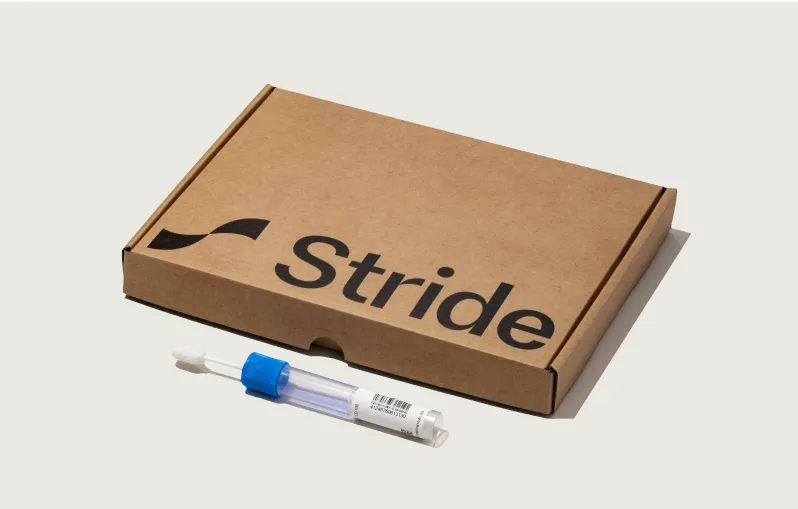






Apolipoprotein A1 (ApoA1) Blood Test
Apolipoprotein A1 ApoA1 is a heart health blood marker that reflects the amount of protective HDL cholesterol particles helping to remove cholesterol from your arteries. It is often used alongside ApoB and standard lipid tests to clarify cardiovascular risk beyond a routine cholesterol panel.

Sample type
Blood sample

Collection
At-home

Often paired with
Lipid panel, ApoB, triglycerides, non HDL cholesterol, Lp(a), hs CRP, HbA1c

Fasting required
0
Key benefits of testing ApoA1
An ApoA1 blood test can help you:
- Understand how much protective HDL related protein is available to help clear cholesterol from your arteries.
- Refine your cardiovascular risk assessment, especially when HDL cholesterol, triglycerides, and ApoB results seem mixed or confusing.
- Explore the ApoB/ApoA1 ratio, which can provide a more nuanced picture of atherosclerosis risk than standard cholesterol alone.
- Support clinician guided decisions on lifestyle changes and lipid lowering therapies.
- Track how your HDL related response changes over time with nutrition, movement, weight changes, and medication.
- Investigate possible inherited HDL deficiencies in specialist settings when ApoA1 is very low.
What is Apolipoprotein A1 ApoA1
Apolipoprotein A1 ApoA1 is the main protein component of high density lipoprotein HDL particles in your blood. HDL is often called the "good" cholesterol because it supports reverse cholesterol transport, the process of moving cholesterol away from artery walls and back to the liver for reuse or removal.
ApoA1 provides the structural backbone for HDL particles and helps them form properly. It also acts as a co factor for an enzyme called LCAT, which helps load cholesterol into HDL so it can be carried safely in the bloodstream. When ApoA1 levels are healthy, you generally have more functional HDL particles helping to clear cholesterol from tissues and blood vessel walls.
Because ApoA1 sits at the centre of HDL formation and function, it is a powerful marker of how well your cholesterol removal system is working. Low ApoA1 can signal reduced HDL capacity, while higher levels usually point to stronger cholesterol efflux and potentially lower cardiovascular risk.
What does ApoA1 do
ApoA1 plays several interconnected roles in lipid and heart health:
- HDL formation and stability. ApoA1 acts as the scaffold that allows HDL particles to form, mature, and remain stable in the bloodstream.
- Reverse cholesterol transport. ApoA1 activates enzymes and transporters that help pull cholesterol out of cells, including cells in the artery wall, and load it into HDL particles.
- Delivery back to the liver. With ApoA1 present, HDL can interact with liver receptors that take up cholesterol for recycling or excretion in bile.
- Anti inflammatory and antioxidant effects. Healthy HDL particles, supported by ApoA1, are involved in modulating inflammation and oxidative stress around blood vessels.
Taken together, these actions mean ApoA1 is not just a structural protein. It is central to how your body handles excess cholesterol and how effectively you can protect artery walls over time.
Why is ApoA1 important for heart health
Cardiovascular risk is not only about how much cholesterol is in your blood, but also how well you move cholesterol in and out of tissues over your lifetime. ApoA1 helps quantify the protective side of that equation by reflecting the capacity of HDL particles to remove cholesterol from vessel walls.
Standard lipid panels often focus on LDL cholesterol and HDL cholesterol concentrations. However, people with similar HDL cholesterol levels can have different ApoA1 concentrations and different cardiovascular risk. Low ApoA1, even when HDL cholesterol appears acceptable, may point to reduced HDL particle number or function.
In prevention focused care, ApoA1 is often considered alongside ApoB, triglycerides, non HDL cholesterol, and inflammatory markers. A pattern of low ApoA1, high ApoB, or an unfavourable ApoB/ApoA1 ratio can indicate a higher burden of plaque forming particles relative to protective HDL capacity, even if total cholesterol does not look dramatically abnormal.
ApoA1 vs HDL cholesterol: what is the difference
It is easy to assume ApoA1 and HDL cholesterol measure the same thing, but they capture different aspects of HDL biology.
- HDL cholesterol HDL C measures the amount of cholesterol carried within HDL particles.
- ApoA1 measures the main structural protein present on HDL particles and reflects HDL particle presence and capacity.
This distinction matters because:
- Some people have HDL particles that carry more or less cholesterol per particle.
- You can have similar HDL cholesterol levels with different ApoA1 levels, suggesting different HDL particle number or function.
- ApoA1 appears to be a more sensitive marker of cardiovascular risk in some studies than HDL cholesterol alone.
When interpreted together, HDL cholesterol and ApoA1 can give a clearer sense of how many HDL particles you have and how effectively they might be supporting cholesterol removal and vascular protection.
What factors affect ApoA1 levels
ApoA1 reflects a mix of genetic, metabolic, hormonal, and lifestyle influences. These are some of the main factors that can shift ApoA1 levels.
1. Genetics baseline HDL capacity
- Some people are genetically predisposed to higher or lower ApoA1 and HDL levels.
- Rare genetic conditions can lead to very low ApoA1 and HDL, associated with premature cardiovascular disease or specific syndromes such as Tangier disease.
- More common genetic patterns influence HDL and ApoA1 modestly and interact with lifestyle factors.
2. Medications and lipid therapies
- Certain lipid lowering therapies, including some statins and other agents that improve HDL function, can modestly raise ApoA1 in some individuals.
- Other medications, including some hormones or specific drugs affecting liver or lipid metabolism, can reduce HDL and ApoA1.
- Any medication change should be considered alongside ApoA1 if you are tracking its trend over time.
3. Body weight and metabolic health
- Central weight gain, insulin resistance, and features of metabolic syndrome are often linked with lower ApoA1 and HDL cholesterol.
- Improvements in metabolic health, such as gradual fat loss and better insulin sensitivity, can support healthier ApoA1 levels over time.
- Conditions like type 2 diabetes and fatty liver often cluster with lower ApoA1 and higher triglycerides.
4. Diet and alcohol intake
- Diet patterns rich in whole foods, fibre, unsaturated fats, and lower in refined carbohydrates can help support healthier HDL and ApoA1 profiles.
- Very high intakes of refined carbs, trans fats, and excess calories may lower HDL and ApoA1, particularly when combined with weight gain.
- Moderate alcohol intake has been associated with higher HDL in some populations, but higher intakes can harm liver health and overall risk. ApoA1 should always be interpreted in the broader lifestyle context.
5. Hormones and life stage
- Oestrogen tends to support higher HDL and ApoA1, so levels can shift with menopause, hormone therapy, pregnancy, and aging.
- Thyroid function also influences lipid metabolism. Low thyroid activity hypothyroidism can lower ApoA1 and HDL and raise other lipids.
- These hormonal factors mean ApoA1 patterns can differ between men and women and at different ages.
6. Physical activity and fitness
- Regular physical activity, especially aerobic exercise, is linked with higher HDL and often higher ApoA1.
- The effect tends to be greatest when exercise contributes to improved metabolic health and body composition.
- Even in the absence of large weight changes, consistent movement can modestly support ApoA1 levels over time.
Can ApoA1 be low when HDL cholesterol is normal
Yes. ApoA1 can be relatively low even when HDL cholesterol appears in the normal range. This can occur when HDL particles carry more cholesterol per particle, or when HDL functionality is not fully captured by cholesterol concentration alone.
In some individuals, especially those with metabolic syndrome, inflammation, or specific genetic backgrounds, HDL cholesterol might not fully reflect the protective potential of HDL particles. In these cases, a lower ApoA1 or an unfavourable ApoB/ApoA1 ratio can provide additional context about cardiovascular risk that standard cholesterol panels might underestimate.
Normal vs optimal ApoA1: what is the difference
Laboratories usually provide a reference range for ApoA1, often with sex specific cut offs. These ranges describe where most of the population falls, but they do not automatically define the optimal level for prevention in every individual.
From a cardiovascular prevention perspective:
- Higher ApoA1 within or slightly above the typical reference range is often associated with lower risk.
- Lower ApoA1, especially in the presence of high ApoB, high triglycerides, insulin resistance, or strong family history of heart disease, may suggest increased long term risk.
- The most appropriate ApoA1 target depends on your overall risk profile and should be individualised with your clinician.
Rather than focusing on a single "perfect" number, ApoA1 is best used as part of a full lipid and metabolic picture, observing how it changes alongside ApoB, LDL cholesterol, triglycerides, hs CRP, and blood sugar markers over time.
Do I need to fast for an ApoA1 test
In many settings, ApoA1 can be measured accurately without fasting, as it is a relatively stable marker. However, fasting is still commonly recommended when ApoA1 is tested as part of a full lipid panel that includes triglycerides and calculated LDL cholesterol.
Your test instructions may specify:
- Whether you need to avoid food and drink other than water for a set period before the blood draw.
- How to handle medications and supplements on the morning of the test.
Always follow the preparation guidance provided with your specific test or from your healthcare provider, so your results can be interpreted consistently over time.
How can ApoA1 be improved clinician guided
Strategies to improve or support ApoA1 centre on enhancing HDL related function and overall cardiometabolic health. Depending on your situation, clinician guided approaches may include:
- Improving metabolic health and insulin sensitivity through nutrition, movement, sleep, and sustainable weight management.
- Shifting diet patterns towards whole, minimally processed foods, with an emphasis on vegetables, fibre, healthy fats, and adequate protein.
- Addressing secondary drivers, such as hypothyroidism or other hormonal imbalances, where relevant.
- Supporting smoking cessation and moderating alcohol intake to protect HDL function and vascular health.
- Considering lipid modifying therapies when appropriate, especially if ApoA1 is low and ApoB or other risk markers are elevated.
ApoA1 is also a useful marker to track over time. Observing its trend alongside ApoB, triglycerides, non HDL cholesterol, and inflammatory markers can help you and your clinician understand how your biology responds to targeted lifestyle changes and any prescribed treatments.
Stride tests that include ApoA1
FAQs
What is the ApoA1 blood test
The ApoA1 blood test measures the main structural protein of HDL particles in your bloodstream. It helps assess how much protective HDL related capacity you have to move cholesterol away from artery walls and back to the liver.
What is a normal ApoA1 range
Reference ranges for ApoA1 differ slightly between laboratories and may be reported separately for men and women. In general, higher ApoA1 within the reference range is associated with lower cardiovascular risk, while lower values may signal increased risk, especially when other lipid markers are unfavourable.
What is an optimal ApoA1 level for heart health
There is no single optimal ApoA1 level for everyone, but higher levels within the lab's reference range are often considered more protective. The most appropriate target depends on your overall risk, including ApoB, LDL cholesterol, triglycerides, blood pressure, smoking status, and family history, and should be personalised with your clinician.
Is ApoA1 better than HDL cholesterol
ApoA1 and HDL cholesterol measure different aspects of HDL biology and are often most useful together. In some studies, ApoA1 appears to be a more sensitive marker of cardiovascular risk than HDL cholesterol alone, because it reflects the structural protein at the core of HDL particles and their potential function.
Can ApoA1 be low with normal HDL
Yes. ApoA1 can be low even when HDL cholesterol appears normal. This pattern suggests that cholesterol concentration within HDL may not fully reflect HDL particle number or function and may warrant closer attention to cardiovascular risk, especially if other markers are unfavourable.
Do I need ApoA1 testing
You may benefit from an ApoA1 test if you have a personal or family history of early heart disease, mixed or unclear cholesterol results, features of metabolic syndrome, or you and your clinician want a more detailed view of your lipid related risk. ApoA1 is not usually used as a general population screen, but it can add valuable context when you are building a personalised, prevention focused strategy.
Do I need to fast for ApoA1
ApoA1 can often be measured without fasting, but if it is part of a broader lipid panel, fasting may be recommended. Always follow the instructions provided with your test kit or by your healthcare provider so your results are consistent and easy to interpret.
How can I improve my ApoA1
Supporting ApoA1 usually means improving overall cardiometabolic health. Regular movement, a whole food focused diet, sustainable weight management, good sleep, and not smoking all contribute. In some cases, addressing thyroid or hormonal issues and using clinician guided lipid therapies can also help. Over time, retesting ApoA1 alongside ApoB and other markers can show you what is actually moving the needle for your heart health.
Do I need an ApoA1 test
If you are focused on prevention, have a strong family history of cardiovascular disease, or have cholesterol patterns that do not match your overall risk profile, discussing ApoA1 testing with your clinician can be helpful. As part of a comprehensive panel such as StrideOne, ApoA1 adds another lens on your heart health, helping you understand how your choices are shaping your long term risk and where to focus next.