
Menu
-
Shop All
Contact
hey@getstride.com
Stride Health Group
Stride Health Group Ltd
Company No 05158025
Lamas Road
Badersfield
Norwich
England
NR10 5FB
UK
Extra 10% Off | Enter code GIFT at checkout


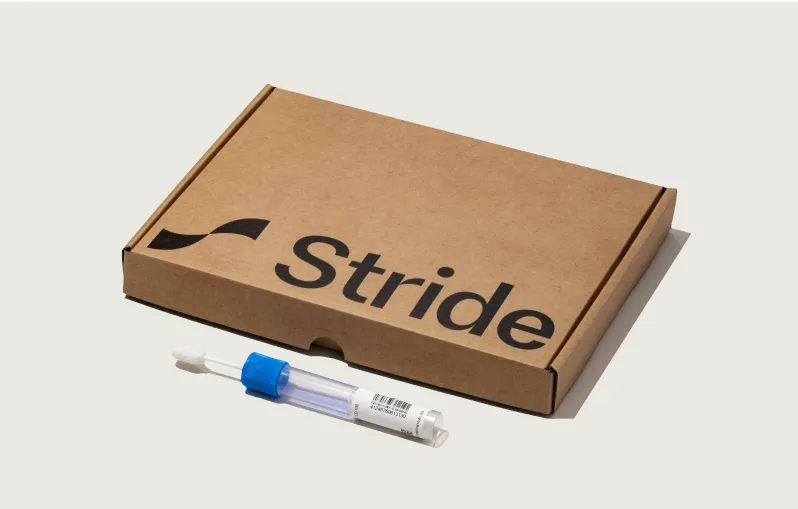






ADA Gene Test (Adenosine Deaminase)
The ADA gene test analyses DNA for variants in adenosine deaminase, a key enzyme in purine metabolism that controls adenosine and deoxyadenosine levels and underpins healthy immune function, cellular energy balance, and T cell ageing. Understanding your ADA status adds genetic context to immune resilience, cardiometabolic health, and biological ageing so you can personalise prevention strategies rather than guessing.


Sample type
Cheek swab, Blood sample

Collection
At-home

Often paired with
Immune cell counts, immunoglobulins, inflammation markers, telomere biology genes, methylation and homocysteine markers, cardiometabolic markers

Fasting required
Not required
Key benefits of testing ADA
- Identify whether you carry ADA variants that change enzyme activity and adenosine handling, which can range from rare severe combined immunodeficiency (SCID) causing mutations to common polymorphisms with more modest effects on adenosine tone and T cell senescence.
- Help explain unusual patterns of immune compromise when ADA deficiency is suspected clinically, by confirming or ruling out a genetic cause for impaired lymphocyte development and recurrent infections.
- Add context to cardiometabolic and endocrine traits, as ADA activity influences insulin bioactivity, vascular tone, and adenosine receptor signalling, which together shape blood flow, blood pressure, and glucose handling.
- Inform personalised longevity and immune ageing strategies, since functional ADA polymorphisms associate with telomerase activity, leukocyte telomere length, and T cell replicative senescence in research contexts.
- Clarify your baseline purine metabolism and adenosine signalling architecture alongside other biomarkers, so long term optimisation plans can be built on both genetics and real time biology rather than population averages.
What is the ADA gene?
ADA (adenosine deaminase) encodes an enzyme of purine metabolism that catalyses the irreversible deamination of adenosine and 2 deoxyadenosine to inosine and 2 deoxyinosine, respectively. This reaction prevents toxic accumulation of deoxyadenosine, particularly in lymphocytes, and contributes to adenosine homeostasis across tissues.
ADA is widely expressed, with high activity in lymphoid tissues, and exists as both an intracellular enzyme and an ecto enzyme form on the cell surface. Severe loss of ADA function causes ADA deficient SCID, a rare but life threatening immunodeficiency, while milder activity changes from common polymorphisms can subtly shift extracellular adenosine concentrations and receptor signalling.
What does ADA do?
At the biochemical level, ADA removes amino groups from adenosine and deoxyadenosine, converting them into inosine and deoxyinosine that can be further metabolised by enzymes such as purine nucleoside phosphorylase. This deamination protects lymphocytes from the accumulation of deoxyadenosine and related metabolites that otherwise impair DNA synthesis and trigger early cell death.
Beyond its catalytic role, ADA also acts as a multifunctional protein on the cell surface. Ecto ADA interacts with adenosine receptors such as A1 and A2A, enhancing receptor affinity for ligands and facilitating efficient G protein coupling. In immune cells, ADA modulates T cell activation, costimulatory molecule expression on dendritic cells, cytokine secretion, and telomerase activity, shaping how T cells proliferate, differentiate, and age over time.
Why is ADA important for health?
ADA sits at the intersection of immune defence, purine metabolism, vascular regulation, and cellular ageing. Complete or near complete ADA deficiency leads to ADA SCID, characterised by profound T, B, and NK cell lymphopenia, recurrent severe infections, and multi system complications driven by toxic purine metabolite accumulation.
At more subtle levels, ADA activity influences adenosine tone, which in turn affects vasodilation, platelet function, insulin action, and anti inflammatory signalling. Functional ADA polymorphisms have been linked to differences in insulin bioactivity, leukocyte telomere length, and T cell telomerase activity, suggesting that variation in ADA can nudge cardiometabolic risk and immune ageing trajectories. For most people, lifestyle and environment still dominate outcomes, but ADA status can help explain why some individuals are more sensitive to purine related stressors or immune challenges.
ADA vs other immune & metabolic markers
It is easy to assume that ADA testing and standard immune or metabolic tests tell you the same story, but they capture different layers of your biology. Full blood counts, immunoglobulin levels, and inflammatory markers show how your immune system is behaving now; glucose, insulin, and lipid panels describe current metabolic status; ADA testing looks at inherited variants and, when measured as enzyme activity, how your purine metabolism and adenosine handling are wired at a foundational level.
This distinction matters because you can have an ADA polymorphism and still have normal immune counts and glucose levels when lifestyle and environment are optimised. Conversely, immune compromise, insulin resistance, or vascular problems can be present without any notable ADA variants due to other genes, infections, medications, or lifestyle factors, which often provide more direct levers for change.
What factors modify the effects of ADA variants?
The influence of ADA variants is strongly shaped by your immune challenges, metabolic environment, and overall lifestyle rather than by the gene alone, which means you have meaningful room to change the trajectory. Several modifiable factors can either buffer or amplify any genetic tendency.
- Infection burden and vaccination: Exposure to pathogens, vaccine status, and infection control practices all shape how often your immune system is stressed. In those with reduced ADA activity, early recognition and treatment of infections and appropriate vaccination strategies are particularly important.
- Metabolic health and insulin sensitivity: Body composition, physical activity, and diet influence insulin action, vascular tone, and inflammatory state, which interact with adenosine signalling and ADA activity. Improving insulin sensitivity through movement and nutrient dense eating often moves the needle more than genotype alone.
- Oxidative and cellular stress: Smoking, heavy alcohol use, chronic sleep deprivation, and high processed food intake increase oxidative burden and can accelerate immune cell ageing. These factors may interact with ADA related differences in telomerase activity and telomere maintenance.
- Coexisting immune or autoimmune conditions: Autoimmune diseases, chronic infections, and immunosuppressive therapies can change the clinical relevance of ADA variation. In these contexts, careful specialist input is key, and ADA status is only one part of the picture.
- Medications and purine metabolism: Drugs that affect purine metabolism, adenosine levels, or adenosine receptors, such as some chemotherapies, immunosuppressants, or adenosine receptor modulators, may have different profiles in people with altered ADA function and should be managed by experienced clinicians.
Can you have ADA variants without symptoms?
Yes, and this is very common. Many people carry ADA polymorphisms, such as the rs73598374 Asp8Asn variant, without ever developing a recognised ADA related disease. These variants often shift enzyme activity within a physiological range and may influence biomarkers like telomere length or subtle aspects of immune ageing without causing obvious illness.
Even for ADA deficiency, carriers of a single pathogenic variant (heterozygotes) usually have enough residual activity to maintain normal immune function. Clinical ADA SCID typically requires biallelic deleterious mutations with very low enzyme activity and appears in infancy with severe infections, failure to thrive, and lymphopenia, rather than subtle adult traits.
ADA genotypes: how do common variants differ?
Common ADA genotypes mainly differ in how they influence enzyme activity, adenosine clearance, and downstream signalling effects on immune and vascular function. Understanding your pattern helps you frame where lifestyle might have outsized impact.
- Wild type ADA: Associated with typical enzyme activity and purine metabolism. Immune function, cardiometabolic risk, and ageing trajectories are driven more by infections, lifestyle, and other genes than by ADA itself.
- Functional polymorphisms with reduced activity: Variants such as Asp8Asn can modestly reduce ADA activity, leading to higher adenosine levels, altered insulin bioactivity in some studies, and changes in telomerase activity and telomere length in T cells. These effects are usually small and become meaningful mainly when combined with other risks.
- Pathogenic loss of function variants: Biallelic deleterious mutations cause ADA deficient SCID, with near absence of functional ADA, accumulation of toxic deoxyadenosine metabolites, profound lymphopenia, and severe early onset infections. These variants require urgent specialist management and are rare in the general population.
How do I prepare for an ADA test?
For DNA based ADA testing, preparation is straightforward because your genotype does not change with diet, exercise, or sleep. The key decision is whether ADA is being tested as part of a clinical SCID workup, a carrier screening panel, or a broader health optimisation panel.
Standalone ADA genotyping using blood or saliva does not require fasting, since it examines stable DNA sequence. If ADA enzyme activity is being measured in blood, or if ADA testing is bundled with other immune or metabolic biomarkers, your clinician or test provider may recommend specific timing and preparation to keep results reliable and comparable over time.
Do I need an ADA test?
An ADA test is most valuable when the result will clearly change clinical care or prevention strategy. It is less useful when ordered out of curiosity without considering symptoms, family history, and other biomarkers.
- Suspected ADA deficient SCID or family history: In infants or children with severe recurrent infections, lymphopenia, or known family history of ADA deficiency, ADA testing is a critical diagnostic and carrier screening tool and should be arranged by an immunology team.
- Carrier screening and reproductive planning: For families with known ADA deficiency or in certain expanded carrier screening contexts, ADA genotyping can clarify carrier status and inform reproductive decisions.
- Immune ageing and longevity focus: In adults investing in detailed prevention, ADA polymorphism status can add a layer to telomere and immune ageing discussions, especially when integrated with telomere length, inflammatory markers, and lifestyle interventions.
- Cardiometabolic and vascular risk context: For individuals with complex cardiometabolic profiles, ADA can contribute to a broader picture of purinergic and insulin related signalling, but lifestyle and standard cardiometabolic markers usually remain the primary drivers of decisions.
Stride tests that include ADA


Health Tests
Core DNA Methylation Test
5 reports: Methylation profile reports
From $229 $183.20
FAQs
What is the ADA gene test?
The ADA gene test analyses your DNA from blood or saliva to look for variants in the adenosine deaminase gene that can influence purine metabolism, adenosine levels, immune function, and, in rare cases, cause ADA deficient severe combined immunodeficiency.
What does an ADA gene mutation mean?
Deleterious ADA mutations that severely reduce enzyme activity can cause ADA deficient SCID when present on both copies of the gene, while more common polymorphisms usually make small changes to enzyme activity, adenosine tone, and immune ageing markers.
Do ADA variants always cause health problems?
No; most ADA variants do not cause overt disease. Only severe biallelic loss of function variants lead to ADA deficient SCID, while common functional polymorphisms typically have modest, context dependent effects that are heavily shaped by lifestyle and environment.
Is ADA testing recommended for immune disorders or metabolic disease?
ADA testing is essential in suspected ADA deficient SCID and helpful in carrier screening when there is a relevant family history. In broader immune or metabolic conditions, ADA genetics are usually considered alongside many other markers rather than as a stand alone test.
Can ADA affect ageing or cardiometabolic health?
ADA influences adenosine levels, insulin bioactivity, vascular tone, and T cell telomere biology, so certain polymorphisms may modestly shift trajectories of immune ageing and cardiometabolic risk, but behaviour and environment remain the primary levers you can control.
Do I need an ADA test?
You might consider an ADA test if there is a family history of ADA deficient SCID, if a clinician suspects an underlying immunodeficiency, or if you are pursuing an in depth genetic prevention strategy where ADA status will inform how you prioritise immune and longevity interventions.
Do I need to fast for ADA testing?
Fasting is not required for DNA based ADA testing, although accompanying blood tests such as immune panels, metabolic markers, or enzyme activity assays may have specific preparation instructions that are worth following for consistent tracking.
How can I optimise ADA related pathways?
Rather than trying to treat the gene, focus on vaccination and infection prevention, nutrient dense food, regular movement, good sleep, avoidance of smoking, careful alcohol use, and inflammation control so your immune and metabolic systems can perform well over time, whatever your ADA genotype.