
Menu
-
Shop All
Contact
hey@getstride.com
Stride Health Group
Stride Health Group Ltd
Company No 05158025
Lamas Road
Badersfield
Norwich
England
NR10 5FB
UK
Extra 10% Off | Enter code GIFT at checkout


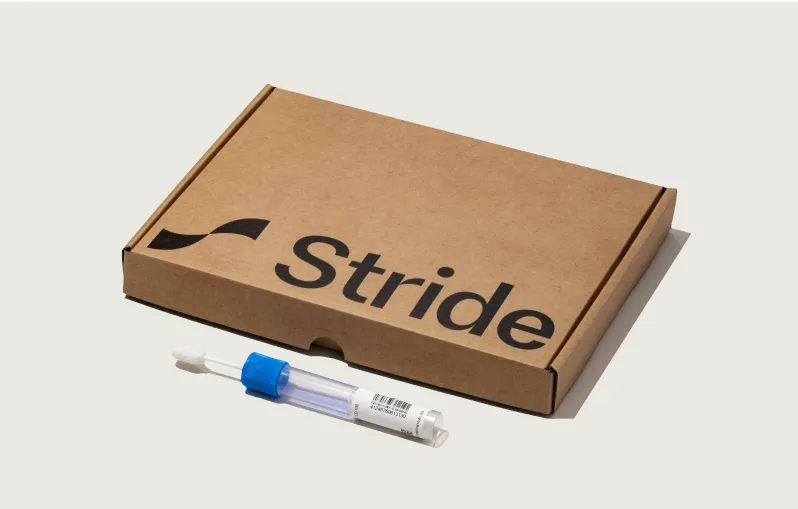





Active B12 Blood Test (Holotranscobalamin)
Active B12 is a functional B12 marker that measures the fraction of vitamin B12 that is bound to transcobalamin and available for your cells to use. Because it reflects the bioavailable form of B12 that can actually enter cells, Active B12 can reveal early deficiency and functional B12 problems that a standard total B12 test may miss.

Sample type
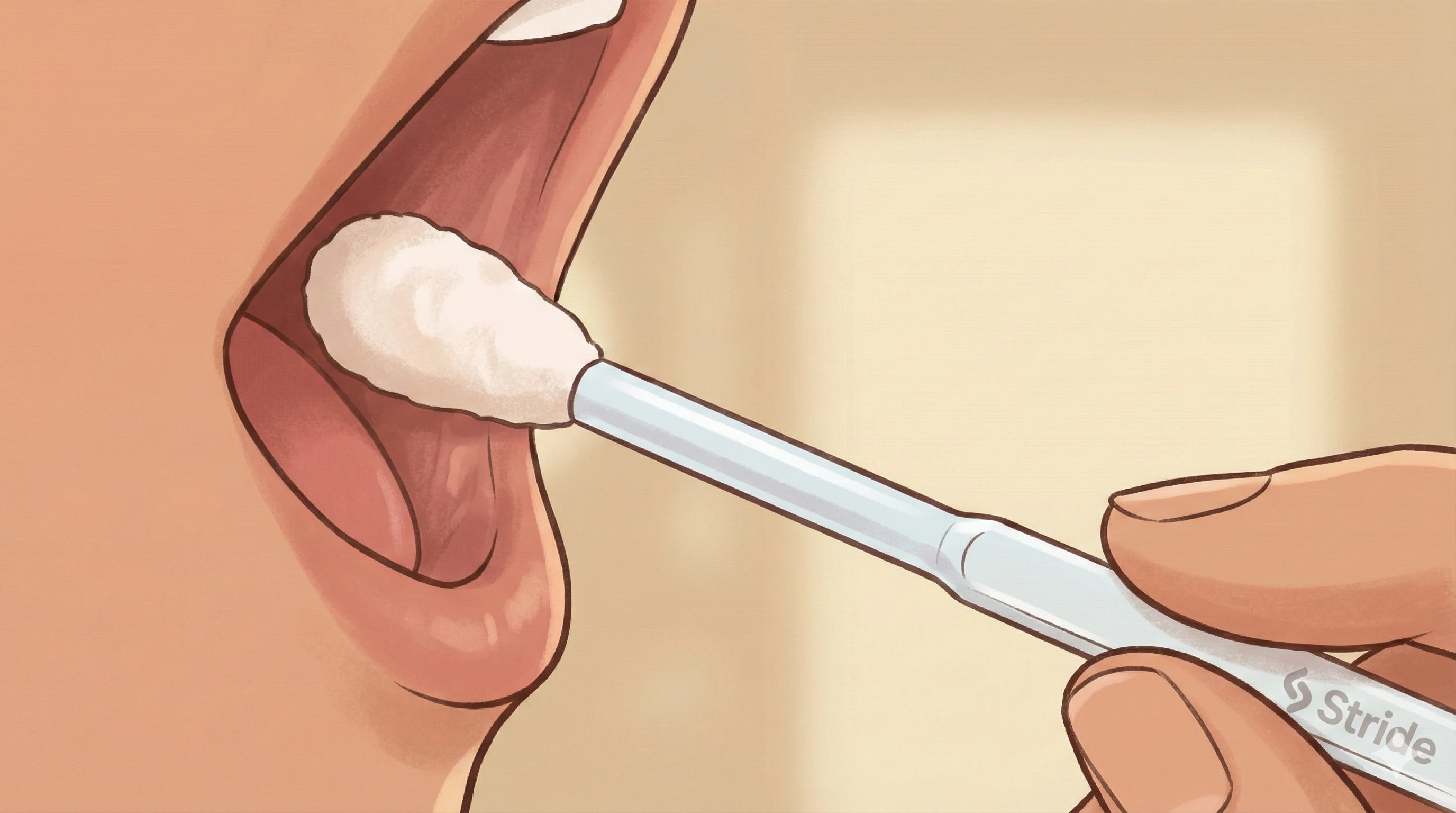
Blood sample

Collection
At-home

Often paired with
Total B12, methylmalonic acid (MMA), homocysteine, folate, full blood count, intrinsic factor antibodies

Fasting required
0
Key Benefits of Testing Active B12
- Detect early or borderline vitamin B12 deficiency that may not show on a standard total B12 test.
- Clarify mixed B12 results by measuring the bioavailable B12 fraction that cells can actually use.
- Help explain symptoms such as fatigue, brain fog, tingling, low mood, and poor concentration when other tests look normal.
- Support clinician guided decisions on B12 supplementation route, dose, and monitoring.
- Track your response to B12 treatment and dietary changes over time with a sensitive functional marker.
- Provide deeper insight into methylation status and nervous system support when interpreted alongside homocysteine and folate.
What is Active B12 (Holotranscobalamin)?
Active B12, also called holotranscobalamin or holoTC, is the portion of vitamin B12 that is bound to a transport protein called transcobalamin. This complex is the form that your cells recognise, take up, and use as a cofactor in key biochemical reactions.
In circulation, most B12 is bound to a different protein called haptocorrin and is not directly available for cellular uptake. By specifically measuring the transcobalamin bound fraction, Active B12 testing focuses on the B12 that is truly accessible to your tissues rather than the total pool.
What does Active B12 do?
Vitamin B12 supports DNA synthesis, red blood cell production, myelin formation around nerves, and methylation pathways that help regulate homocysteine and neurotransmitter balance. Active B12 is the fraction that actually delivers B12 into cells so these processes can run efficiently.
When Active B12 levels fall, cells may struggle to perform these tasks even if total B12 appears in the normal range. This is why people can have neurological, cognitive, or energy related symptoms with borderline or normal total B12, but a low Active B12 result.
Why is Active B12 important for health?
B12 deficiency can affect multiple systems at once, from energy and mood to nerve function and blood health. Total B12 tests can be hard to interpret because they include both active and inactive forms and can be influenced by binding proteins and other conditions.
Active B12 provides a more direct view of how much usable B12 is available to your cells, which can improve early detection of deficiency, especially in people with subtle symptoms, digestive issues, or risk factors such as vegetarian or vegan diets, gastric surgery, or certain medications. In a preventative health context, it helps you identify and address B12 issues before they progress to more severe neurological or haematological problems.
Active B12 vs total B12: What is the difference?
It is easy to assume Active B12 and total B12 measure the same thing, but they capture different parts of the story.
- Total B12 measures the overall amount of vitamin B12 in the blood, including both active and inactive forms.
- Active B12 measures only the B12 bound to transcobalamin, which is the form that cells can take up and use.
This matters because total B12 can look normal or borderline while Active B12 is already low, particularly in the early stages of deficiency or when binding proteins are altered. Active B12 can therefore help uncover a functional B12 shortfall that might otherwise be missed and can support more confident decisions when total B12 results are inconclusive.
What factors affect Active B12 levels?
Active B12 reflects how much bioavailable vitamin B12 is circulating and ready to be taken up by your cells. These are the main things that influence that number.
1. Dietary intake and absorption
Vitamin B12 comes mainly from animal based foods such as meat, fish, eggs, and dairy. Low intake is common in vegetarian and vegan diets if B12 fortified foods or supplements are not used consistently. Even with adequate intake, absorption can be impaired by low stomach acid, intrinsic factor problems, coeliac disease, inflammatory bowel disease, gastric surgery, or long term use of certain medications such as proton pump inhibitors and metformin.
2. Transcobalamin and binding proteins
Active B12 specifically depends on how much B12 is bound to transcobalamin. Changes in the production or function of this transport protein, or shifts in the balance between transcobalamin and haptocorrin, can alter Active B12 without large changes in total B12. Some genetic and acquired factors can affect these binding proteins and therefore the observed active fraction.
3. Methylation demand and metabolic health
B12 is essential for homocysteine metabolism and methylation pathways. High metabolic demand, chronic inflammation, or increased turnover of methylation reactions can increase the body's need for B12. In these settings, Active B12 may fall sooner than total B12, especially if intake or absorption are borderline.
4. Digestive and autoimmune conditions
Conditions that affect the stomach or small intestine, such as pernicious anaemia, chronic gastritis, coeliac disease, or inflammatory bowel disease, can reduce B12 absorption and lower Active B12 levels. Autoimmune attack on intrinsic factor or parietal cells can be particularly important, as it interferes with the normal binding and uptake of dietary B12.
5. Medications and lifestyle
Long term use of certain medications, including acid suppressing drugs, metformin, and some anticonvulsants, can contribute to B12 deficiency over time. High alcohol intake, poor diet quality, and chronic stress can also influence overall B12 status, either by affecting intake, absorption, or metabolic demand.
6. Age, pregnancy, and individual variation
Older adults are more likely to have reduced stomach acid and changes in gut function that lower B12 absorption. Pregnancy increases B12 requirements for both parent and baby. Individual genetic variation in B12 transport and metabolism can also shape where your Active B12 levels sit within standard ranges and how quickly they change.
What is a normal Active B12 level?
Reference ranges for Active B12 vary by laboratory and assay, and are usually reported in pmol/L. A common pattern in UK practice is:
- Below around 25 pmol/L: consistent with vitamin B12 deficiency.
- Around 25 to 70 pmol/L: possible vitamin B12 deficiency, often considered an indeterminate or grey zone.
- Above around 70 pmol/L: B12 deficiency is unlikely in most individuals.
These thresholds guide interpretation but are not the whole story. Symptoms, total B12, homocysteine, methylmalonic acid, and other blood results all help determine whether a given Active B12 level is concerning or reassuring for you personally.
Normal vs optimal Active B12: What is the difference?
A result within the laboratory reference range is typically reported as normal, but optimal B12 status depends on your biology, lifestyle, and long term goals. Some people with values in the lower end of the normal or borderline range may still experience symptoms such as fatigue, low mood, or cognitive changes, particularly if other risk factors are present.
From a preventative health perspective, the aim is not just to avoid overt deficiency, but to support B12 levels that are robust enough for healthy methylation, neurological function, and blood production over time. That is why combining Active B12 with other markers and tracking how it responds to diet and supplementation can be more informative than a single reading against a broad population range.
Do I need to fast for an Active B12 test?
Active B12 testing does not usually require fasting. Vitamin B12 levels change relatively slowly and are less influenced by a single meal than markers like glucose or triglycerides.
If your Active B12 test is being run alongside other blood tests that do require fasting, your provider or test instructions will let you know how to prepare. Staying consistent with preparation each time you test makes it easier to compare results and see real shifts in your B12 status over time.
How can Active B12 be improved? Clinician guided
Improving Active B12 focuses on supporting intake, absorption, and delivery to cells. Depending on your situation, clinician guided strategies may include:
- Adjusting your diet to include reliable sources of B12, especially if you follow a vegetarian or vegan pattern.
- Using oral B12 supplements or fortified foods to increase intake, with form and dose tailored to your needs.
- Considering higher dose oral or injectable B12 in cases of malabsorption, pernicious anaemia, or significant deficiency, guided by a clinician.
- Reviewing medications that may be affecting B12 absorption and discussing alternatives where appropriate.
- Pairing Active B12 with homocysteine, MMA, and folate to monitor how your methylation pathways respond to treatment over time.
Because B12 interacts with folate, B6, and other nutrients in shared pathways, it is often helpful to look at methylation and blood health more broadly rather than focusing on a single marker in isolation.
Stride tests that include Active B12
FAQs
What is an Active B12 test?
An Active B12 test measures the amount of vitamin B12 bound to transcobalamin in your blood, which represents the fraction of B12 that is available for your cells to use, rather than the total pool of B12.
How is Active B12 different from a standard B12 test?
A standard B12 test measures all circulating B12, including inactive forms, while Active B12 focuses on the bioavailable fraction. This can make it more sensitive for detecting early or functional B12 deficiency, especially when total B12 is borderline.
What is a normal Active B12 level?
Typical reference ranges place clear deficiency at the lowest end, an indeterminate or possible deficiency zone in the middle, and a range where deficiency is unlikely at the upper end. Your report will usually specify these cut offs, and your clinician will interpret them alongside symptoms and other tests.
What does a low Active B12 level mean?
A low Active B12 result suggests that your cells may not be getting enough B12, even if total B12 appears normal. It often points toward issues with intake, absorption, or increased demand and may be associated with symptoms affecting energy, mood, cognition, and nerve function.
Can Active B12 be high, and what does that mean?
Very high Active B12 levels are less common and may reflect high intake or injections, but can sometimes be associated with liver disease, kidney disease, or changes in binding proteins. Persistently elevated results should be interpreted in a clinical context rather than in isolation.
Do I need an Active B12 test?
You may benefit from an Active B12 test if you have symptoms suggestive of B12 deficiency, follow a vegetarian or vegan diet, have digestive or autoimmune conditions that affect absorption, or have borderline total B12 results that do not match how you feel.
Do I need an Active B12 test with Stride?
If you want to understand your B12 status at a functional level, beyond a simple total B12 number, Active B12 is a valuable marker to include within StrideOne or Stride Optimal Bloods. It helps you see how well your current diet, supplements, and lifestyle are supporting methylation, energy, and nervous system health so you can adjust with confidence.