
Menu
-
Shop All
Contact
hey@getstride.com
Stride Health Group
Stride Health Group Ltd
Company No 05158025
Lamas Road
Badersfield
Norwich
England
NR10 5FB
UK









News
8 Minutes

MTHFR gene: what C677T and A1298C mean for you
What the MTHFR gene does, what C677T and A1298C variants mean, how to check your status (including 23andMe data) and where folate, B2 and B12 fit in.

 05/09/2024
What the MTHFR gene does
MTHFR is the gene that carries the instructions for an enzyme called methylenetetrahydrofolate reductase. The enzyme makes 5-MTHF (5-methyltetrahydrofolate), the active form of folate your body uses to recycle homocysteine and keep methylation running.
Many people carry a variant in this gene, often called an MTHFR mutation, that makes the enzyme work less efficiently. The two common ones are C677T and A1298C. Both are widespread and neither is a disease. What they mean for you depends largely on how much folate, riboflavin (B2) and B12 you get.
This article explains:
C677T and A1298C: the two common variants
You inherit one copy of the MTHFR gene from each parent, so for each variant you can have none, one or two copies. For C677T, a result of CC means no copies, CT means one (heterozygous) and TT means two (homozygous). A1298C is written the same way: AA, AC or CC.
C677T has the bigger effect. It produces a less stable version of the enzyme, and in lab studies two copies cut its activity to around a third of normal or lower. One copy reduces it more modestly. A1298C has a milder effect, and studies disagree on how much it changes the enzyme on its own.
Some people carry one copy of each, known as compound heterozygous. Activity is lower than with a single variant, but usually higher than with two copies of C677T.
| Your result | What it means | Effect on the enzyme |
|---|---|---|
| 677 CC and 1298 AA | No copies of either variant | Typical |
| 677 CT | One copy of C677T | Mildly reduced |
| 677 TT | Two copies of C677T | Most reduced |
| 1298 AC or CC | One or two copies of A1298C | Small or uncertain |
| 677 CT and 1298 AC | Compound heterozygous | Moderately reduced |
How common are they?
In many populations around 40% of people carry one copy of C677T, and roughly 10–15% of people of European ancestry carry two. The numbers vary widely between groups: US figures suggest about a quarter of people of Hispanic ancestry have two copies, while two copies are much rarer in people of African ancestry. A1298C is also common worldwide.
What an MTHFR variant does, and what it doesn't
A slower MTHFR enzyme makes less 5-MTHF, which leaves less available for turning homocysteine back into methionine. People with two copies of C677T tend to have higher homocysteine and slightly lower blood folate than people without the variant.
How big that effect is depends heavily on diet. Homocysteine tends to rise mainly when folate intake is low. Riboflavin matters too, because MTHFR relies on a helper molecule made from it, called FAD. The C677T enzyme loses its FAD more easily, and good folate and riboflavin status help keep it stable. In a small 12-week trial in Northern Ireland, 1.6 mg of riboflavin a day lowered homocysteine in people with two copies of C677T, but not in people with one copy or none.
What it doesn't mean
Carrying an MTHFR variant isn't a diagnosis. Large studies link two copies of C677T with modestly higher homocysteine and, when folate is low, a small increase in the risk of neural tube defects in pregnancy. Links with blood clots, heart disease and miscarriage have been inconsistent.
That's why clinical guidance in the UK and the US advises against routine MTHFR testing to investigate blood clots or pregnancy loss. The British Society for Haematology's 2022 guideline says MTHFR variants shouldn't be included in thrombophilia (clotting) test panels, and the American College of Medical Genetics and Genomics recommends against testing for them in these situations. A result wouldn't change how doctors manage either problem.
Where an MTHFR result helps
Its value is in guiding nutrition. Knowing you carry two copies of C677T is a good reason to keep your folate and riboflavin intake consistently high and to check your homocysteine instead of assuming it's fine. It can also help explain a borderline blood result.
The result is most informative alongside the other genes in the same pathway. MTR and MTRR handle the B12-dependent step that uses 5-MTHF, and BHMT offers a second recycling route that runs on betaine, so two people with the same MTHFR genotype can have quite different overall pictures.
MTHFR symptoms in women (and men)
MTHFR variants don't cause symptoms of their own. Most lists of MTHFR symptoms online actually describe low folate or low B12, which anyone can develop whatever their genes. Those include extreme tiredness, a sore red tongue, mouth ulcers, low mood and problems with memory or concentration.
Pins and needles, numbness, problems with balance or vision, or confusion need prompt attention from your GP, because nerve damage from low B12 can become permanent if it isn't treated.
For women, the bigger question is usually pregnancy. Folate helps the baby's neural tube, which becomes the brain and spinal cord, form properly in the first weeks after conception, so folic acid before and during early pregnancy matters whatever your genotype.
If you've had recurrent miscarriages, your GP can refer you for the tests that guidelines do support, such as screening for antiphospholipid antibodies.
Folic acid or methylfolate?
The NHS advises taking 400 micrograms (µg) of folic acid a day from when you start trying for a baby, ideally three months beforehand, until you're 12 weeks pregnant. Some women are prescribed a higher 5 mg dose, for example if they have diabetes, take medicine for epilepsy or have had a previous pregnancy affected by a neural tube defect. That advice applies whether or not you carry an MTHFR variant.
Folic acid is the form used in the trials that showed folate supplements prevent neural tube defects, and people with MTHFR variants can still process it. The US Centers for Disease Control and Prevention (CDC) states plainly that common variants such as C677T are not a reason to avoid folic acid.
If you're pregnant or trying to conceive, keep taking folic acid as advised. If you'd prefer methylfolate, talk it through with your GP or midwife before you switch.
Methylfolate (5-MTHF) is the form MTHFR produces, so your body can use it without needing the enzyme first. That makes it a reasonable alternative for some people, and some pregnancy supplements now include it. Outside pregnancy, both forms raise your folate status; methylfolate simply skips a step.
Folic acid is also added to many breakfast cereals, and from December 2026 non-wholemeal wheat flour in the UK must be fortified with it too. Neither is a concern if you carry an MTHFR variant.
How to find out your MTHFR status
Your MTHFR result comes from a genetic test, and because your genes don't change, you only need it once.
Stride DNA & Methylation Test
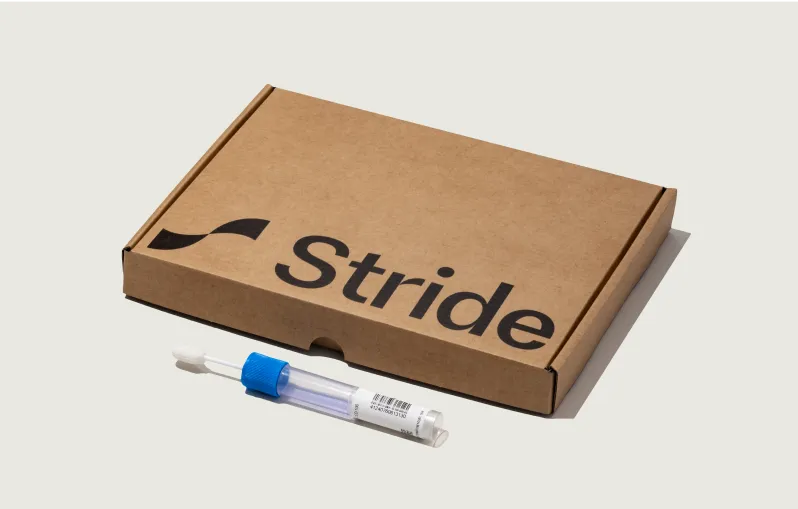
Every level of the Stride DNA & Methylation Test covers MTHFR C677T and A1298C, along with COMT and the other genes in Stride's five methylation cycles. It's an at-home cheek swab analysed at accredited specialist laboratories, with results in about 10 working days. Each level includes a 1:1 consultation with an expert, which helps when a result such as compound heterozygous needs putting in context.
Already tested with 23andMe?
Your MTHFR variants are usually in the raw data file you can download from your account, listed as rs1801133 (C677T) and rs1801131 (A1298C). The letters can be confusing because the file reads the opposite strand of DNA. For rs1801133, GG corresponds to CC (no variant), AG to one copy and AA to two copies of C677T.
If you'd rather not decode it yourself, Optimal DNA Link reads your 23andMe file without a new sample and puts MTHFR in context with your other methylation genes.
Choosing an at-home MTHFR test
Whichever test you use, look for one that:
reports both C677T and A1298C
reads MTHFR alongside related genes such as MTR, MTRR and BHMT
names the accredited laboratory that analyses your sample
gives you access to someone qualified to explain the results
has a clear privacy policy for your genetic data
You may have first heard about MTHFR from Gary Brecka, the US wellness personality who did much to popularise genetic methylation testing. His own Ultimate Human Wellness test is now sold in the UK through Healf, and 10X Health, the company he co-founded and left at the end of 2024, sells another in the US. We compare them with Stride's test in Gary Brecka methylation test vs Stride DNA.
Does your MTHFR result matter right now?
Your genotype describes a tendency. Blood tests show whether it's affecting you today.
| Blood test | What it tells you | In Optimal Bloods? |
|---|---|---|
| Folate | Your recent folate intake | Yes |
| Active B12 | The B12 your cells can use, which MTR needs alongside 5-MTHF | Yes |
| Homocysteine | Whether recycling is keeping up overall | No, ask your GP |
If your folate and B12 are healthy and homocysteine is in range, your variant isn't causing a problem at the moment. If homocysteine is raised, your GP can look for the cause, which might be low B vitamins, reduced kidney function, an underactive thyroid or a medicine you take.
In the UK, Optimal Bloods checks folate and active B12 from a home blood draw by a trained professional.
Practical support if you carry a variant
The basics are the same as for anyone. You just have more reason to be consistent with them.
Folate from food
Spinach, kale, broccoli, Brussels sprouts, asparagus, peas, chickpeas and lentils. Steam or microwave greens, as folate leaches into cooking water.
Riboflavin (B2)
Milk, yoghurt, eggs, mushrooms and fortified breakfast cereals. It often gets left out of MTHFR advice.
Vitamin B12
Fish, meat, eggs and dairy. If you're vegan, you'll need fortified foods or a supplement.
Alcohol
Heavy drinking depletes folate. Keep within the UK guideline of 14 units a week, spread over several days.
If your diet falls short or a blood test comes back low, a supplement with methylfolate and methylcobalamin is a simple option. MS-01 Methylation Support provides 400 µg methylfolate, 5 µg methylcobalamin and vitamin B6 as P5P in one daily capsule. Folate, vitamin B6 and vitamin B12 contribute to normal homocysteine metabolism. MS-01 doesn't contain riboflavin, so keep B2-rich foods in your diet.
For a fuller food list, see how to support methylation naturally. For how MTHFR fits into the bigger picture, read our guide to what methylation is.
FAQs
Is MTHFR a disease?
No. MTHFR is a gene everyone has. The common C677T and A1298C variants are inherited differences that can reduce the enzyme's activity, and most people who carry them stay healthy, particularly with a good intake of folate and riboflavin.
Can I take folic acid if I have an MTHFR variant?
Yes. People with MTHFR variants can process folic acid, and the NHS advice to take 400 micrograms a day before conception and until 12 weeks of pregnancy applies to them too. If you would prefer methylfolate, discuss it with your GP or midwife first.
How common is the MTHFR mutation?
Very common. Around 40% of people carry one copy of C677T, and roughly 10 to 15% of people of European ancestry carry two, with wide variation between populations.
Does 23andMe test for MTHFR?
Usually, in the raw data. You can download your file and look up rs1801133 (C677T) and rs1801131 (A1298C), or upload it to Stride's Optimal DNA Link for an interpreted methylation report.
Should I get an MTHFR test after a miscarriage?
UK and US guidelines advise against it for that purpose, because MTHFR variants haven't been shown to affect miscarriage risk in a way that changes treatment. Your GP can refer you for the investigations that are recommended.
The bottom line
MTHFR makes the enzyme that produces active folate. Its C677T and A1298C variants are common and can slow that enzyme down, and they matter most when folate, riboflavin or B12 intake is low.
A genetic test tells you which variants you carry, and blood tests show whether they're affecting you now. If you're planning a pregnancy, keep taking folic acid as the NHS advises, and talk to your GP or midwife before changing it.
Find out what your body is actually trying to tell you.
Answer 8 quick questions and get a free personalised report - covering which area of your biology is most worth looking at first, what testing in that area reveals, and what actions become available once you have that data.
Where do you feel you're operating below your potential right now?
Methylation & Cellular Health
Your biology is signalling a methylation upgrade - here’s what that means and what to do about it.