
Menu
-
Shop All
Contact
hey@getstride.com
Stride Health Group
Stride Health Group Ltd
Company No 05158025
Lamas Road
Badersfield
Norwich
England
NR10 5FB
UK






News
8 Minutes
The 5 Ps of Gut Health (and the Smart Way to Use a Gut Health Test Kit)
What a gut health test kit measures, who it helps and how to act on your results, using the 5 Ps of gut health from prebiotics to postbiotics.

 28/01/2026
Watch the video: The 5 Ps explained
The 5 Ps of gut health
Prebiotics, polyphenols, probiotics, parabiotics and postbiotics. These five categories cover the biggest inputs that shape your gut environment, and they're also a practical way to act on your results after gut biome testing or other forms of gut health testing.
The transcript of the video comes first. After it, you'll find what a gut health test kit measures, who it suits, how to use your results with the 5 Ps and what to look for when choosing a kit.
Andrew:
If you think about fibre, there’s an old myth people used to repeat: “It doesn’t matter because it’s not really calories. You can’t truly digest it.” But the truth is, there are second-order effects that matter a lot.
Simon:
And today we’re walking through the “5 Ps” for gut health: prebiotics, polyphenols, probiotics, parabiotics and postbiotics.
1) Prebiotics: non-digestible fibres that feed healthy gut bacteria
Andrew:
Let’s start with prebiotics. These are non-digestible fibres that help feed your own healthy gut bacteria. The good news is that prebiotics are pretty easy to get from a balanced diet. For example:
chickpeas
lentils
other legumes
leeks
carrots
courgettes
and vegetables in general
If you eat your veg consistently, you’ll naturally get more prebiotics into your diet.
Simon:
You said “non-digestible”, so what’s actually happening? If we aren’t digesting these fibres, how do they help?
Andrew:
It’s easy to think digestion is mostly about the stomach, but the really interesting benefits happen further along the gut. Your gut microbes ferment these prebiotic fibres and produce short-chain fatty acids (SCFAs). That’s where many of the beneficial effects of fibre come from. So even though you don’t digest fibre in the same way as other nutrients, your microbiome turns it into something useful.
2) Polyphenols: plant compounds that support gut diversity
Simon:
Next up: polyphenols.
Andrew:
Polyphenols are plant compounds that act as antioxidants. They help support the growth of beneficial gut bacteria and can support the gut lining. A lot of people also associate polyphenols with bacteria like Akkermansia, which you may have heard about.
Common sources include:
berries (especially dark berries like blueberries and blackberries)
coffee
tea
You don’t need a huge bowl of berries every day, but it’s an easy, practical way to increase polyphenols consistently.
3) Probiotics: live cultures from fermented foods
Simon:
Okay, number three is probiotics.
Andrew:
Yes. Probiotics are probably the most well-known of the 5 Ps.
Probiotics are live bacteria found in fermented foods, including:
live yoghurt with cultures
kefir
sauerkraut
kombucha
other fermented foods
Adding probiotic foods can be a great boost, especially when you’ve already built the foundations with fibre and plants.
4) Parabiotics: benefits even when microbes aren’t alive
Simon:
Now the fourth P: parabiotics. I’ve never heard of these. Are they a new trend?
Andrew:
Parabiotics aren’t new. They’ve always existed. We just haven’t talked about them much. Parabiotics are typically found in certain functional foods or supplements, and can include bacteria that have been inactivated (for example through heat treatment), but may still support gut health in useful ways. They’re part of the wider “biotic pathway”, and they can matter just as much as the more familiar categories.
5) Postbiotics: helpful compounds produced during fermentation
Simon:
And the final P is postbiotics.
Andrew:
Postbiotics are bioactive compounds produced by probiotics during fermentation. A common misconception is: “probiotics only work if they’re alive when they reach your gut.” But postbiotics are one reason fermented foods can still offer benefits even when bacteria don’t survive perfectly. Good sources include:
kefir
sauerkraut
miso
fermented soy foods
aged cheeses like Parmesan
Quick summary: how to apply the 5 Ps day to day
If you want a simple way to implement the 5 Ps without overthinking it:
Prebiotics: eat more legumes and vegetables
Polyphenols: add berries, coffee, or tea regularly
Probiotics: include fermented foods like yoghurt or kefir
Parabiotics: consider functional foods or supplements where relevant
Postbiotics: remember that fermented foods can help even beyond their live bacteria
This framework is also useful after using a gut health test kit, because it gives you practical levers to pull instead of random trial-and-error.
What a gut health test kit measures
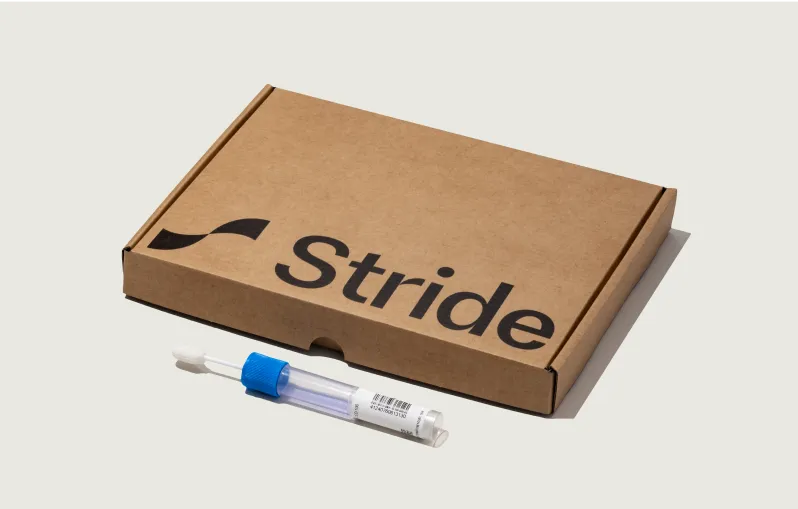
A gut health test kit, more accurately called a gut microbiome test, analyses a small stool sample that you collect at home and post to a lab. The lab reads the genetic material of the microbes in the sample to work out which bacteria are there and in what proportions.
A good report turns that into a handful of useful measures:
Composition and diversity
Which bacteria you have, how abundant they are and how varied the community is. Higher diversity is generally linked with a healthier gut.
SCFA producers
Whether you have plenty of the bacteria that ferment fibre into short-chain fatty acids. One of these acids, butyrate, is the main fuel for the cells lining your colon.
Gut-brain markers
Bacteria involved in pathways linked to serotonin, dopamine and GABA production, part of the two-way link between your gut and brain.
Signs of imbalance
Patterns that suggest inflammation or dysbiosis, which means the balance of your gut community has shifted in an unhelpful direction.
A microbiome test isn't a diagnostic test. It can't diagnose IBS, coeliac disease, inflammatory bowel disease or an infection, and it doesn't replace NHS bowel cancer screening.
Who a gut microbiome test can help
A test is most useful when you're ready to act on what it tells you. That tends to include:
People with ongoing, non-urgent gut symptoms such as bloating or irregular bowel habits, who have already spoken to their GP and want to understand their gut better.
People about to change their diet, for example eating more plants or more fermented foods, who want a baseline to measure progress against.
People rebuilding after a disruption such as a course of antibiotics, a stressful few months or a long stretch of poor eating.
Anyone curious about the gut's wider links, from mood to the gut-skin axis, who would rather work from data.
See your GP first, rather than buying a test, if you have any of these:
How to use your results with the 5 Ps
Results work best as a starting point for one or two specific changes. This is where the 5 Ps become practical.
| If your report shows | Where to start | The P |
|---|---|---|
| Low diversity | Widen the range of plants you eat, and add a fermented food most days | Prebiotics, polyphenols, probiotics |
| Few SCFA-producing bacteria | More fibre from pulses, oats, whole grains and cooked-and-cooled potatoes or rice, built up slowly to avoid bloating | Prebiotics |
| Low Bifidobacterium | Onions, leeks, garlic, asparagus and slightly green bananas, which contain fibres that bifidobacteria feed on | Prebiotics |
| Signs of inflammation | Less ultra-processed food, more berries and colourful vegetables, and a word with your GP if you also have gut symptoms | Polyphenols |
Change one or two things at a time and stick with them. Your gut bacteria respond to what you eat within days, but lasting shifts depend on habits you keep up for months. Retesting after a few months of consistent changes shows whether your diversity and SCFA producers have actually moved.
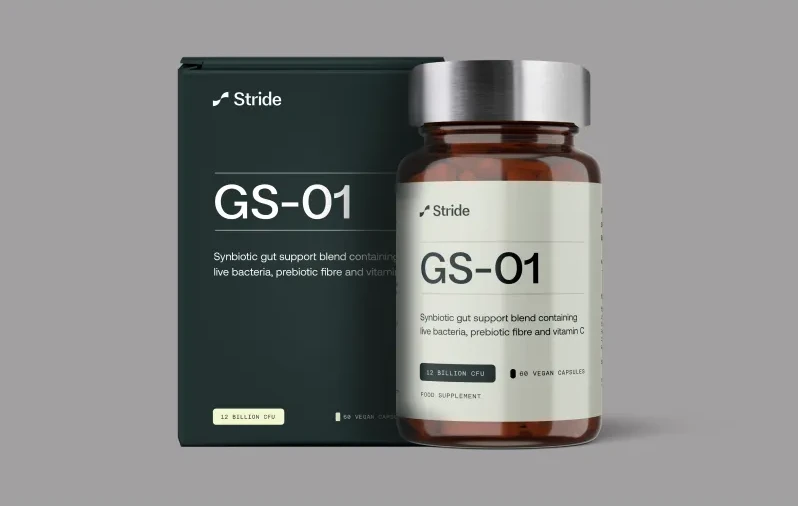
If you'd like a supplement alongside food, GS-01 Gut Health Support is Stride's synbiotic. Each two-capsule serving provides 12 billion live cultures, including Lactobacillus and Bifidobacterium species, with prebiotic FOS fibre and vitamin C, which contributes to the normal function of the immune system. Food still comes first.
What to look for in a gut health test kit
Gut tests vary a lot in what they measure and how much they help. When you compare kits, look for:
Named bacteria and clear explanations. A report should tell you which microbes it measured and what they do, beyond a single gut score.
Measures of function. Scores such as SCFA production say more about what your bacteria are doing than a list of species.
Food-first recommendations. Advice tied to your own results is more useful than a generic supplement plan.
A named lab and a clear privacy policy. You should be able to find out who analyses your sample and how your data is stored and used.
A retest option. One result is a snapshot. A second, a few months later, shows whether your changes worked.
Honest limits. Be cautious about kits that claim to diagnose disease or identify food intolerances from a stool sample.
Stride's gut health test kit, Optimal Biome, analyses more than 300 gut bacteria from an at-home stool sample. Your report covers microbial diversity, a short-chain fatty acid score, gut-brain markers and signs of inflammation or dysbiosis, with tailored recommendations and the option to retest. It's currently available to UK customers only.
FAQs
What are the 5 Ps of gut health?
The 5 Ps are prebiotics, polyphenols, probiotics, parabiotics and postbiotics. Together they make a simple framework for supporting your gut microbiome through food and, where useful, supplements.
What's the difference between prebiotics and probiotics?
Prebiotics are fibres that feed your beneficial gut bacteria. Probiotics are live bacteria, found in fermented foods such as yoghurt and kefir and in supplements.
What are parabiotics and postbiotics?
Parabiotics are microbes that have been inactivated, for example by heat, but may still offer benefits. Postbiotics are bioactive compounds made during fermentation, which helps explain why fermented foods can be useful even if not all their bacteria survive digestion. The definitions are still settling, and some scientists now group inactivated microbes under postbiotics too.
What does a gut health test kit measure?
Most analyse a stool sample to show which bacteria you have and how diverse they are. Many kits also report on the bacteria that make short-chain fatty acids, gut-brain markers and signs of inflammation or dysbiosis. They don't diagnose medical conditions.
Should I use a gut health test kit or just take supplements?
A gut health test kit can help you understand patterns in your microbiome, while supplements can support targeted changes. Most people get the best results by improving the foundations first: fibre, plant diversity, and consistency.
The bottom line
The 5 Ps give you a simple way to feed and diversify your gut bacteria: plenty of fibre-rich plants, polyphenol-rich foods such as berries, coffee and tea, and fermented foods most days.
A gut health test kit shows where you're starting from, so you can focus on the Ps that matter most for you and retest to see whether your changes are working.
Find out what your body is actually trying to tell you.
Answer 8 quick questions and get a free personalised report - covering which area of your biology is most worth looking at first, what testing in that area reveals, and what actions become available once you have that data.
Where do you feel you're operating below your potential right now?
Methylation & Cellular Health
Your biology is signalling a methylation upgrade - here’s what that means and what to do about it.