
Menu
-
Shop All
Contact
hey@getstride.com
Stride Health Group
Stride Health Group Ltd
Company No 05158025
Lamas Road
Badersfield
Norwich
England
NR10 5FB
UK









News
8 Minutes
Methylation supplements: what they are and how to know if you need one
Methylation supplements pair methylated B vitamins with methyl donors such as TMG. What they contain, who may need one and what to check on the label.

 12/02/2026
What are methylation supplements?
Methylation supplements usually combine methylated B vitamins, mainly methylfolate (5-MTHF) and methylcobalamin (vitamin B12), with methyl donors such as trimethylglycine (TMG, also called betaine) and choline. Many also include vitamin B6 as P5P, and some add riboflavin (B2). They're aimed at people whose methylation may need extra support, such as those with MTHFR or other gene variants, low or borderline folate or B12 on a blood test, or a raised homocysteine result from their GP.
Methylation is the process your cells use to attach small chemical tags, called methyl groups, to DNA, proteins and other molecules. It relies on a steady supply of these nutrients.
Many people first hear about methylation supplements after a DNA test. Others come across methylation through supplement brands, podcasts or high-profile health programmes and are left wondering which supplements actually make sense. The challenge is that a supplement can't tell you whether your body needs it, or whether it's being absorbed and used well.
This article explains:
DNA, blood tests and supplements
To make methylation actionable, you need to connect three layers:
Genetic methylation capacity
Functional blood markers
Targeted supplementation
Step 1: What genetic methylation tests tell you
A genetic methylation test looks at inherited variants in pathways such as the folate cycle, methionine cycle, transsulphuration pathway, urea cycle and BH4 cycle. These pathways help determine how efficiently the body uses nutrients such as folate, B vitamins, choline and other compounds involved in methylation, neurotransmitter balance and detoxification.
Genetic tests explain:
Which nutrients are more critical for you
Where bottlenecks may exist
Why certain deficiencies may recur
They do not confirm if you are deficient right now. Genetics describe capacity, not status.
Step 2: Blood tests that show whether methylation is supported
Blood testing is what turns genetic insight into practical decisions.
Key blood markers linked to methylation include:
Folate, ideally measured over time
Active vitamin B12
Homocysteine
Vitamin B6
Vitamin D
Magnesium, zinc and iron
Stride's Optimal Bloods (UK only) includes folate, active B12 and vitamin D. Homocysteine isn't part of it, so ask your GP if you'd like that checked.
If these markers are suboptimal, methylation supplements may be appropriate. If they are already high, supplementation may be unnecessary or counterproductive. In short, blood testing tells you whether your methylation pathways are actually short of what they need right now.
Step 3: What goes into a methylation supplement
Methylation-supporting supplements are nutrients that either provide methyl groups or help support the enzymes involved in methylation pathways. Some act as direct or indirect methyl donors, while others work as cofactors that allow these biochemical processes to run efficiently.
Common methylation supplements include:
Methylfolate (5-MTHF)
Methylated vitamin B12 (methylcobalamin)
Vitamin B6
Riboflavin (B2)
Choline and betaine
Magnesium and zinc
These are often bundled together in what's marketed as a methylation supplement or methylation support supplement. How well one works for you depends on whether the underlying need has been confirmed.
When methylation supplements make sense
Methylation supplements are most useful when:
Genetics suggest reduced pathway efficiency
Blood tests show low or borderline nutrient levels
Homocysteine is elevated
You have symptoms such as ongoing tiredness, and your GP has ruled out other causes
In these cases, a targeted supplement can help make up the shortfall.
What to look for in a methylation supplement
Labels in this category can be hard to compare. These are the details that matter most:
Methylfolate (5-MTHF). This is the form of folate that circulates in your blood, so your body doesn't need the MTHFR enzyme to activate it. If you're pregnant or trying to conceive, NHS advice to take 400 µg of folic acid a day, from before conception until 12 weeks, still applies; talk to your GP or midwife if you'd prefer methylfolate.
Methylcobalamin. One of the two active forms of vitamin B12, and the one the methionine cycle uses directly.
Vitamin B6 as P5P. Pyridoxal-5-phosphate is the active form of B6.
Riboflavin (B2). The MTHFR enzyme depends on a helper molecule made from riboflavin, and research suggests riboflavin status matters most for people with two copies of the MTHFR C677T variant. Not every methylation formula includes it, so check where yours comes from.
TMG or choline. TMG feeds a second route, through the BHMT enzyme, that recycles homocysteine back into methionine. Your body also makes betaine from choline, found in eggs, meat, fish and soya.
Sensible doses. Each nutrient is listed with a %NRV (its nutrient reference value). Modest doses are usually enough unless a health professional has advised more. UK advice is not to take more than 10 mg of vitamin B6 a day from supplements, and large amounts of folic acid can hide the anaemia caused by low B12, which is one reason to check B12 as well.
Testing first. A DNA test shows tendencies. Blood tests for folate, active B12 and homocysteine show where you are now.
Stride's option is MS-01 Methylation Support: one vegan capsule a day with methylfolate (400 µg), methylcobalamin (5 µg), vitamin B6 as P5P (2.8 mg), vitamin C (80 mg) and 50 mg of TMG. Folate, vitamin B6 and vitamin B12 contribute to normal homocysteine metabolism and to the reduction of tiredness and fatigue. MS-01 doesn't contain riboflavin, so if that's a gap for you, look to milk, yoghurt, eggs and fortified cereals, or a multivitamin that includes it.
Methylated vs liposomal
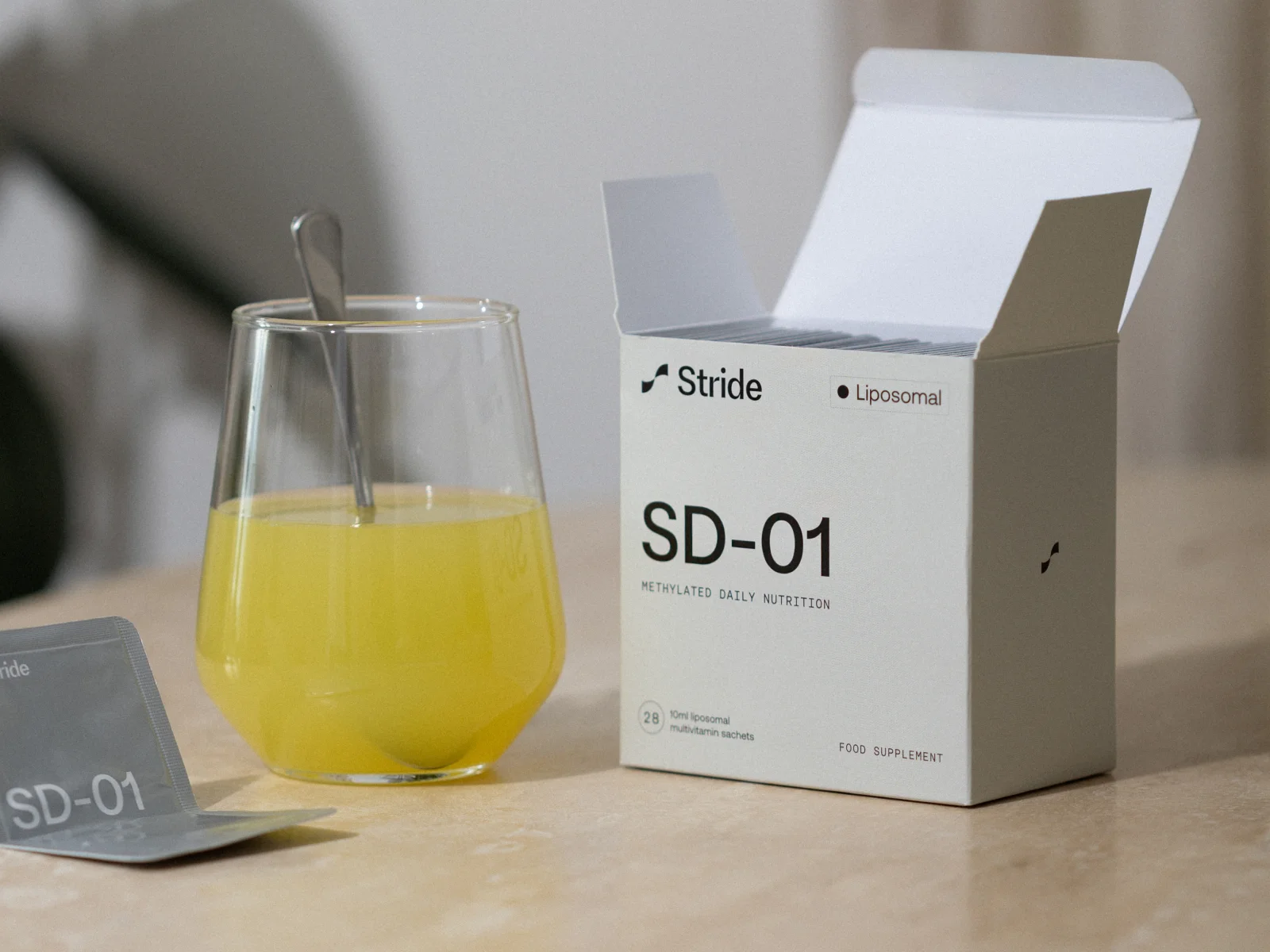
The two terms often turn up together but mean different things: methylated describes the active form of a nutrient, while liposomal describes how it's delivered, wrapped in tiny phospholipid spheres designed to protect it through digestion. A product can be one, both or neither. We cover how they fit together in Liposomal and methylated vitamins: what makes SD-01 different, and what liposomal delivery can and can't do in our guide to liposomal supplements.
A common mistake: choosing supplements before measuring
A frequent pattern looks like this:
Someone learns about methylation online
They buy a methylation supplement or liposomal delivery supplement
They adjust doses based on symptoms alone
Without blood testing, this approach is guesswork. The same supplement can help one person and hinder another.
The most reliable approach: DNA, blood, then supplements
The most consistent strategy follows a clear order:
DNA testing to understand capacity
Blood testing to confirm functional need
Supplement choice based on both
Repeat blood testing to confirm response
This approach applies equally to standard and liposomal supplements.
FAQs
Do methylation supplements work for everyone?
No. They are most effective when blood markers show a functional need.
What is the best methylation supplement?
There isn't one best formula for everyone. Look for methylfolate (5-MTHF), methylcobalamin and vitamin B6 as P5P at modest doses, ideally chosen after a blood test for folate and active B12. Riboflavin and TMG can be useful additions.
Should I take methylfolate instead of folic acid if I'm trying to conceive?
Speak to your GP or midwife first. NHS advice is to take 400 micrograms of folic acid a day before conception and until 12 weeks of pregnancy. Methylfolate is an alternative you can discuss with them.
Can supplements replace blood testing?
No. A supplement can change your levels, and a blood test is how you see whether it has.
The bottom line
Methylation supplements are tools, not defaults. A DNA test can show where your pathways may need extra support, and a blood test shows if you're actually short of folate or B12 right now.
If you do need one, choose active forms (methylfolate, methylcobalamin and P5P) at sensible doses, and retest to check it's doing what you hoped. Delivery format affects absorption, not whether you need the nutrient in the first place.
Find out what your body is actually trying to tell you.
Answer 8 quick questions and get a free personalised report - covering which area of your biology is most worth looking at first, what testing in that area reveals, and what actions become available once you have that data.
Where do you feel you're operating below your potential right now?
Methylation & Cellular Health
Your biology is signalling a methylation upgrade - here’s what that means and what to do about it.